What is BSDS? Bipolar Spectrum Disorder Assessment Guide
Do you ever feel like your moods swing to extremes, from incredible highs to deep lows, affecting your work, relationships, and daily life? Understanding these fluctuations is the first step toward gaining clarity. Bipolar disorder is a complex mental health condition that affects millions, but reliable information can be hard to find.
Fortunately, scientifically validated tools exist to help you understand these experiences. One of the most respected is the Bipolar Spectrum Diagnostic Scale (BSDS). In this guide, we'll explain what the BSDS is, how it works, and the insights it provides.
This article will walk you through everything you need to know about this important screening tool. If you're ready to better understand your emotional patterns, you can gain initial insights with our free and confidential BSDS assessment. It's a simple, private way to begin your journey toward clarity.
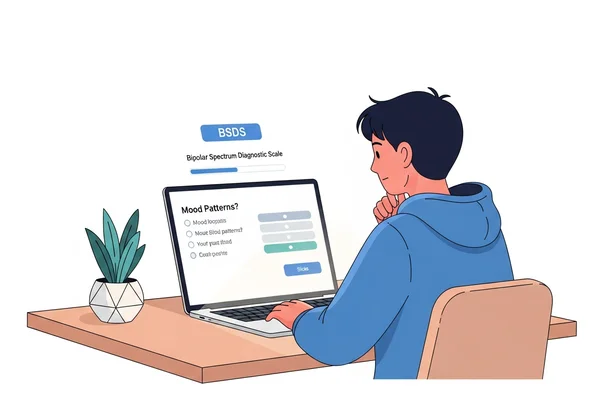
What is the Bipolar Spectrum Diagnostic Scale (BSDS)?
The Bipolar Spectrum Diagnostic Scale (BSDS) is a self-report questionnaire designed to help identify symptoms associated with the bipolar spectrum. Developed by Dr. Ronald Pies, a respected psychiatrist, the scale was created to address a common challenge: distinguishing bipolar disorder from other mood disorders, especially major depression.
The BSDS stands out from other assessments with its unique story-based format. It presents a paragraph describing common experiences of someone with bipolar disorder. You then rate how well this story matches your own life. This approach helps capture the subtle yet significant shifts in mood, energy, and behavior that define the bipolar spectrum.
The BSDS is considered a highly reliable preliminary screening tool by many mental health professionals. It has been scientifically validated through research, showing its effectiveness in helping people recognize potential bipolar traits. It's a trusted first step before seeking a formal clinical diagnosis.
Understanding the Structure of the BSDS Assessment
The BSDS assessment is designed to be straightforward and user-friendly. It avoids confusing clinical jargon and instead focuses on relatable experiences. The core of the assessment is a narrative that describes shifts between elevated moods (mania or hypomania) and depressive states.
After reading the story, you'll answer a few simple questions. You will indicate how much the story reflects your own experiences and then check off specific symptoms you have felt. Completing the assessment is quick, usually taking just a few minutes.
When you take the BSDS test on our platform, the process is simple and intuitive. The questions are designed to gently guide you through a self-reflection of your mood patterns over time. This provides a structured way to think about your experiences. To experience our user-friendly interface, try the BSDS self-assessment.
How the BSDS Scores Bipolar Symptoms
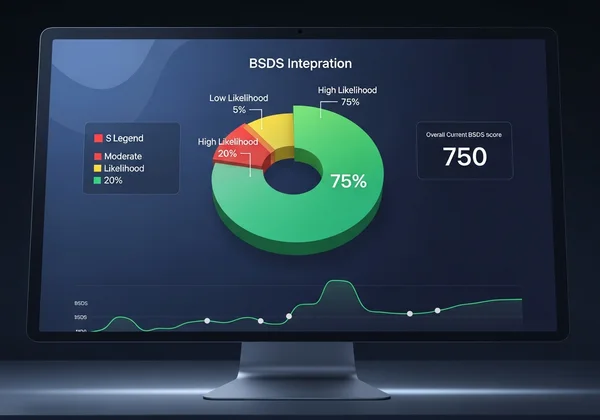
Your BSDS score comes from your responses to the story and symptom checklist. This score gives a preliminary indication of whether your experiences align with the bipolar spectrum. It is not a diagnosis but a measure of likelihood.
Generally, scores are categorized into ranges. A higher score suggests a greater probability that your symptoms may be part of the bipolar spectrum. For example, the scoring helps differentiate between mild mood fluctuations and more significant patterns that could warrant professional attention.
Interpreting your results is the first step. The score you receive helps you understand if your symptoms are consistent with bipolar traits. This information can be incredibly valuable when you decide to speak with a healthcare professional, giving you a clear starting point for that conversation. For detailed interpretation of your score, explore our BSDS analysis report.
The Importance of Early Bipolar Disorder Detection
Living with undiagnosed bipolar disorder can be incredibly challenging. Studies show that many people wait years before receiving an accurate diagnosis. This delay can negatively impact their career, relationships, and overall well-being. Early detection is crucial for improving quality of life.
Early recognition of symptoms allows for quicker access to effective treatments and management strategies. These approaches help stabilize moods, reduce episode severity, and empower people to live fulfilling lives. Self-assessment tools like the BSDS play a vital role in this process.
An online screening can bridge the gap between wondering and knowing you need to seek help. If you've been concerned about your mood swings, taking a BSDS screening can be a proactive and empowering step. Take the first step with our confidential bipolar screening. It can provide the confidence needed to start a conversation with a doctor or therapist.
Different Types of Bipolar Disorder and BSDS
Bipolar disorder is not a one-size-fits-all condition. It exists on a spectrum that includes several types, most commonly Bipolar I and Bipolar II.
- Bipolar I Disorder is defined by at least one manic episode, which involves a period of abnormally elevated or irritable mood and high energy. Depressive episodes are also common.
- Bipolar II Disorder involves at least one hypomanic episode (a less severe form of mania) and at least one major depressive episode.
The BSDS is valuable because it is designed to screen for features across this entire spectrum. It helps identify the core patterns of mood elevation that are central to all types of bipolar disorder. However, a self-assessment cannot definitively distinguish between Bipolar I and II. Only a qualified professional can make that determination.
BSDS vs. Other Bipolar Assessment Tools
While there are several tools used to screen for bipolar disorder, the BSDS has unique advantages. Many other questionnaires, like the Mood Disorder Questionnaire (MDQ), use a simple "yes/no" format. The BSDS, with its narrative-based approach, often captures the nuances of bipolar symptoms more effectively. This can be especially helpful for identifying "softer" signs of bipolarity that might otherwise be missed.
The story format allows for self-identification with a pattern of behavior, which can feel more intuitive than checking off a list of abstract symptoms. By comparing your life experiences to the narrative, you can gain a more holistic sense of whether the bipolar spectrum might apply to you.
Your Next Steps After Taking the BSDS
After completing the BSDS and receiving your score, you might wonder what to do next. Your score is a valuable piece of information, but it is not a final answer. The best next step is to discuss your results with a qualified healthcare professional, such as a psychiatrist, psychologist, or primary care doctor.
They can provide a comprehensive evaluation, which may include a clinical interview and other diagnostic tools, to give you a definitive diagnosis. Remember, the BSDS is a starting point for a conversation, not a replacement for professional medical advice.
Taking a screening is a courageous first move toward understanding your mental health. It empowers you with information and helps you take control of your well-being. If you are ready to learn more, our Bipolar Spectrum Diagnostic Scale is available for you to take at any time.