BSDS History & Validation: Scientific Basis of Bipolar Screening
In the complex landscape of mental health, having reliable tools for initial screening is not just helpful—it's essential. For those navigating the turbulent waters of extreme mood shifts, finding clarity can be the first step toward stability. This is where the BSDS (Bipolar Spectrum Diagnostic Scale) emerges as a crucial instrument. But what is the diagnostic scale for bipolar disorder and what makes it a trustworthy starting point? This article unveils the scientific foundation of the BSDS, exploring its history, validation, and role in modern mental health.
Understanding the science behind a screening tool builds confidence. It assures you that your journey of self-discovery is based on a credible and well-researched foundation. We invite you to explore the evidence, and when you are ready, you can start your free screening on our secure platform.

BSDS Scale History: Origins of Bipolar Screening
Every significant tool in psychology has an origin story, born from a clinical need to better understand the human mind. The history of the BSDS is a story of moving beyond rigid diagnostic boxes to embrace a more nuanced understanding of mood disorders. This historical context is vital for appreciating its innovative approach to identifying potential signs of bipolar spectrum conditions.
Early Approaches to Diagnosing Mood Disorders
For many years, diagnosing mood disorders was a challenging process, often leading to misidentification. Bipolar disorder, in particular, was frequently mistaken for unipolar depression. This is because many individuals seek help during depressive episodes, while periods of elevated mood (mania or hypomania) might be overlooked, unreported, or even perceived as positive bursts of productivity.
Traditional diagnostic methods relied heavily on clinical interviews that required patients to accurately recall and report a lifetime of mood fluctuations. This created a significant gap, as subtle signs of hypomania or mixed states were easily missed. The need for a more sensitive screening instrument—one that could help individuals recognize and articulate these complex experiences—became increasingly apparent to researchers and clinicians alike.
The Genesis of the BSDS: Who Developed It and Why?
The Bipolar Spectrum Diagnostic Scale was developed by Dr. Ronald Pies, a psychiatrist and researcher who recognized the limitations of existing screening methods. Dr. Pies observed that many patients who didn't fit the strict criteria for Bipolar I or II disorder still suffered from significant mood instability that responded to treatments for bipolar disorder. He aimed to create a tool that could identify symptoms across the entire bipolar spectrum.
The result was the BSDS, a unique self-assessment tool. It combines a checklist of symptoms with a brief, compelling story about an individual experiencing classic bipolar spectrum traits. This narrative approach helps users recognize similar patterns in their own lives that they might not have otherwise identified, making it an exceptionally insightful and user-friendly instrument. The goal was not to diagnose but to empower individuals to have more informed conversations with healthcare professionals, equipped with a structured summary of their experiences. You can explore this unique format with our bsds online test.

Scientific Validation of BSDS: What the Research Shows
A screening tool is only as good as the science that supports it. For the BSDS, years of research have demonstrated its effectiveness as a reliable instrument for identifying individuals who may benefit from a full clinical evaluation for bipolar disorder. The scientific basis of BSDS is rooted in rigorous testing and validation studies.
Understanding Psychometric Properties: Reliability & Validity
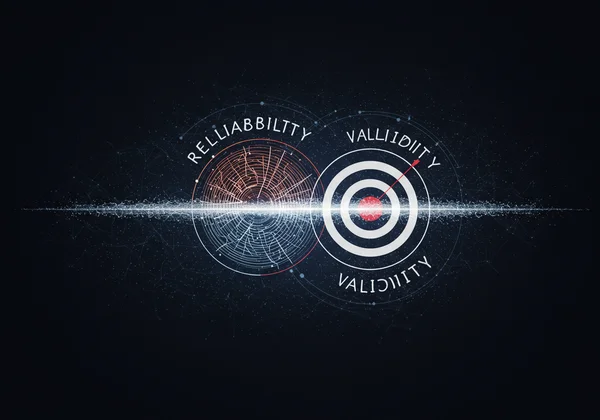
To trust a psychological test, we must understand its psychometric properties, primarily its reliability and validity. Think of it this way: reliability is about consistency—if you take the test under similar conditions, will you get a similar result? Validity is about accuracy—does the test actually measure what it claims to measure?
The BSDS has been shown in multiple studies to have strong psychometric properties. Research published in journals like the Journal of Affective Disorders has confirmed its ability to consistently produce stable scores (reliability) and to accurately distinguish between individuals with bipolar disorder and those with other conditions, like unipolar depression (validity). This scientific backing is what makes the BSDS a trusted first step.
How Accurate is the BSDS Test for Screening Bipolar Disorder?
This is a critical question for anyone considering a self-assessment. Studies have consistently shown that the BSDS has high sensitivity, meaning it is very good at correctly identifying people who likely have a bipolar spectrum condition. Its purpose is to cast a wide net to ensure that potential cases are not missed. This makes it an excellent screening tool.
However, it is equally important to understand its specificity. While it is good at flagging potential issues, not everyone who scores high on the BSDS will receive a formal diagnosis of bipolar disorder from a clinician. The BSDS is designed to be a starting point for a conversation, not the final word. It provides valuable data to bring to a professional, who can then conduct a comprehensive diagnostic evaluation. If you're curious about your own experiences, you can take the BSDS test today.
The BSDS in Modern Mental Health: Its Role and Limitations
In the evolving field of mental health, the BSDS has carved out a distinct and valuable niche. Its development represents a significant step forward in bipolar diagnostic tool development, emphasizing accessibility and patient empowerment. Understanding its role, as well as its limitations, is key to using it effectively.
BSDS vs. Other Bipolar Screening Tools: What Sets It Apart?
While other screening tools like the Mood Disorder Questionnaire (MDQ) exist, the BSDS offers a unique approach. The primary distinction lies in its narrative component. By presenting a story, the BSDS helps individuals connect with experiences rather than just ticking off a list of abstract symptoms. This can trigger self-recognition in a way that a simple checklist cannot.
Furthermore, its focus on the "spectrum" acknowledges that bipolar symptoms exist on a continuum. It helps identify individuals with softer or less classic presentations who might be missed by other screeners. This makes it particularly useful for identifying conditions like Bipolar II Disorder or Cyclothymia, which are often characterized by less severe hypomanic episodes. You can experience this comprehensive approach with our free bipolar test.
Beyond Screening: The BSDS as a Conversation Starter with Professionals
Perhaps the most important role of the BSDS is to bridge the gap between personal experience and clinical consultation. Many people struggle to find the right words to describe their emotional fluctuations to a doctor. The results from a bsds selfassessment provide a structured, evidence-based report that can facilitate a more productive and efficient conversation.
It is crucial to remember that the BSDS is not a substitute for a professional diagnosis. It is a powerful informational tool designed to empower you. Think of it as organizing your thoughts and experiences into a clear summary that you can share with a qualified healthcare provider. They will use this information, along with a full clinical interview and their professional expertise, to arrive at an accurate diagnosis and treatment plan.
Your Next Steps: Embracing Clarity with the BSDS
The Bipolar Spectrum Diagnostic Scale is more than just a questionnaire; it's a scientifically validated tool built on a deep understanding of mood disorders. Its history reflects a move toward more nuanced and patient-centered care, while rigorous research confirms its reliability and accuracy as a screening instrument. By understanding its scientific basis, you can feel confident in using it as a trustworthy first step.
Your mental health journey deserves to start with clarity and confidence. The BSDS provides a private, accessible, and scientifically grounded way to explore your experiences. Let this knowledge empower you to take the next step.
Ready to gain insight? Begin your free BSDS assessment today and start a new, informed chapter in your mental wellness journey.
Frequently Asked Questions About the BSDS
What is the Bipolar Spectrum Diagnostic Scale (BSDS)?
The Bipolar Spectrum Diagnostic Scale (BSDS) is a scientifically validated self-assessment screening tool designed to help individuals identify symptoms and experiences that may be associated with bipolar spectrum disorders. It uses a unique combination of a narrative story and a checklist to help users recognize potential patterns of mood swings, including both manic/hypomanic and depressive episodes. It is intended as a first step to facilitate a more informed discussion with a healthcare professional.
How accurate is the BSDS test for identifying symptoms?
Research has shown the BSDS to be a highly sensitive screening tool. This means it is very effective at correctly identifying individuals who might have a bipolar spectrum condition and should seek further evaluation. However, like any screening tool, it is not 100% accurate and is not a diagnostic instrument. A high score on the bsds screening suggests that a professional consultation is a wise next step.
Is the BSDS a definitive diagnosis for bipolar disorder?
No, absolutely not. The BSDS is a screening tool, not a diagnostic test. A definitive diagnosis for bipolar disorder can only be made by a qualified healthcare professional, such as a psychiatrist or psychologist, after a comprehensive clinical evaluation. The results from the BSDS are meant to be a starting point for that important conversation.
Can the BSDS distinguish bipolar depression from unipolar depression?
The BSDS is specifically designed to help with this common diagnostic challenge. By screening for a history of manic or hypomanic symptoms—which are the key differentiators for bipolar disorder—it helps identify individuals whose depression may be part of a bipolar spectrum condition. This distinction is crucial, as the treatment for bipolar depression differs significantly from that for unipolar depression. You can explore these nuances with our bipolar disorder test.