BSDS Test Accuracy: What It Can & Can’t Tell You
BSDS Test Accuracy: What It Can & Can't Tell You
Have you ever taken a self-assessment online and wondered how reliable it truly is? When navigating the complexities of mental health, especially conditions like bipolar disorder, understanding the tools you use is crucial. Many of us turn to the internet for initial answers, seeking clarity and direction. This article delves into the Bipolar Spectrum Diagnostic Diagnostic Scale (BSDS), exploring its scientific accuracy, its designed purpose, and most importantly, what you can genuinely learn from its results. How accurate is the BSDS test? Let's explore this together.
Feeling overwhelmed on your mental health journey is completely normal, but tools like the BSDS are designed to be a supportive first step. If you're looking for a starting point, you can take our free BSDS test anytime. It's a confidential and accessible way to gain preliminary insight.
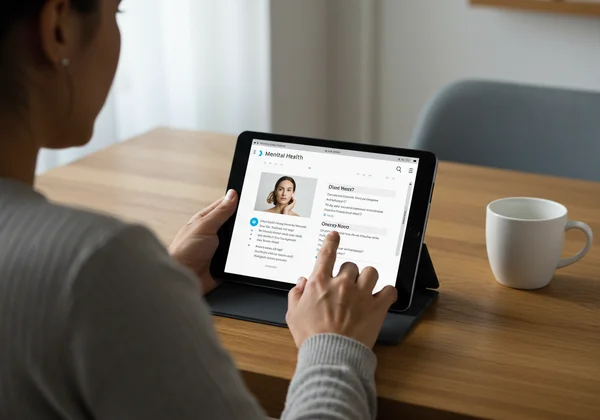
Understanding the BSDS: Bipolar Screening Validity
Before we can discuss accuracy, it's essential to understand what the BSDS is and its role in the broader landscape of mental health care. The term "validity" in this context refers to how well a test measures what it claims to measure. The BSDS was specifically designed with a clear purpose in mind: to serve as an effective screening tool for features of the bipolar spectrum.
What is the Bipolar Spectrum Diagnostic Scale (BSDS)?
The Bipolar Spectrum Diagnostic Scale (BSDS) is a self-reported questionnaire developed by Dr. Ronald Pies and later refined by Dr. S. Nassir Ghaemi. This tool is designed to help individuals identify experiences and symptoms that are characteristic of the bipolar disorder spectrum. Unlike a simple mood quiz, the BSDS is a clinically validated instrument. This means its questions and scoring system are based on extensive research and have been shown to be effective at distinguishing potential bipolar features from other mood states. The scale prompts you to reflect on your personal history of mood shifts, energy levels, and behavior in a structured way.
The Purpose of a Screening Tool in Mental Health
It is critically important to understand the role of a screening tool. Think of it like a smoke detector: it alerts you to the possible presence of fire, but it doesn't tell you the cause, size, or exact location of the blaze. Similarly, a mental health screening tool like the BSDS flags potential areas of concern that warrant further investigation. It is not a diagnostic instrument. Its primary purpose is to raise awareness and facilitate a more informed conversation between you and a qualified healthcare professional. Taking a BSDS self-assessment can provide a valuable summary of your experiences to share with a doctor.
How Accurate is the BSDS Test?
This is the central question for anyone considering the test. The accuracy of the BSDS test has been studied in clinical settings, and it's recognized for its strong psychometric properties. However, "accuracy" in this context is nuanced and involves understanding its scientific foundation.
The Scientific Basis and Validation of BSDS
The BSDS has demonstrated good sensitivity and specificity in clinical studies. Sensitivity refers to its ability to correctly identify individuals who may have a bipolar spectrum condition (avoiding false negatives). Specificity refers to its ability to correctly identify individuals who likely do not have the condition (avoiding false positives). Research published in reputable psychiatric journals supports the BSDS as a reliable tool for screening purposes. This scientific backing is what separates it from unverified online quizzes and makes it a trustworthy starting point for self-reflection and professional consultation.
Understanding Reliability vs. Validity in Self-Assessments
To fully grasp the accuracy of any psychological assessment, it helps to know two key terms: reliability and validity. Reliability is about consistency; a reliable test will produce similar results if taken by the same person under similar circumstances at different times. Validity, as mentioned earlier, is about whether the test measures what it’s supposed to measure. The BSDS is considered both reliable and valid as a screening tool for bipolar spectrum characteristics. It consistently identifies relevant patterns and effectively measures the specific traits associated with the bipolar spectrum, making it a powerful resource for personal insight.
BSDS Limitations: What It Cannot Tell You
While the BSDS is a powerful and accurate screening tool, understanding its BSDS limitations is just as important as knowing its strengths. Being aware of what it cannot do helps manage expectations and ensures you use the results in the most responsible and helpful way. The most crucial limitation is that it does not provide a definitive diagnosis.
Why a Screening Tool Isn't a Definitive Diagnosis
A definitive diagnosis for bipolar disorder can only be made by a qualified healthcare professional, such as a psychiatrist or clinical psychologist. A formal diagnosis involves a comprehensive clinical evaluation that considers many factors beyond a questionnaire score. This includes a detailed personal and family medical history, a clinical interview to understand the context of your symptoms, and ruling out other medical or psychological conditions that could be causing your symptoms. The BSDS is one piece of a much larger puzzle, and your results from the free bipolar test are best used to start a dialogue with a professional.
Factors Influencing BSDS Results (Beyond Bipolarity)
Your score on a BSDS self-assessment can be influenced by various factors that may not be related to bipolar disorder. For example, conditions like attention-deficit/hyperactivity disorder (ADHD), certain anxiety disorders, post-traumatic stress disorder (PTSD), or even periods of extreme stress can present with symptoms that overlap with those on the BSDS, such as mood swings or changes in energy. A high score simply indicates that your experiences align with those measured by the scale; it doesn't explain the underlying cause. This is why professional evaluation is irreplaceable.
Your BSDS Score: A Stepping Stone to Clarity
Receiving your preliminary BSDS score should not be seen as an endpoint or a label. Instead, view it as a valuable starting point—a stepping stone on your path toward greater self-understanding and well-being. It is a structured piece of information that empowers you to take the next step with more confidence.
Interpreting Your Preliminary BSDS Score
When you complete the BSDS, you will receive a preliminary score. This score is a summary of your responses, indicating the degree to which your experiences match the characteristics of the bipolar spectrum as defined by the scale. A higher score suggests a greater likelihood that you might benefit from a professional evaluation. It is not a measure of your worth or a definitive statement about your identity. It is simply data to help guide your next actions. If you're ready, you can start your self-assessment and see your preliminary results instantly.
Next Steps: Beyond the Self-Assessment
After taking the BSDS, the most important next step is to discuss your results with a healthcare professional. You can print your results or have them ready on your phone to share with your doctor, psychiatrist, or therapist. This report gives them a concise and evidence-based summary of your experiences, which can make your first conversation more focused and productive. It helps bridge the gap between your personal feelings and the clinical language of mental health, empowering you to advocate for your own care.

Empowering Your Journey with the BSDS
Your journey to understanding your mental health is a personal one, and the Bipolar Spectrum Diagnostic Scale is designed to be a powerful companion. While it's a reliable and scientifically validated screening tool—excellent for identifying potential features of the bipolar spectrum and sparking important conversations—remember, it's not a substitute for a professional diagnosis.
By understanding both its capabilities and its limitations, you can use the BSDS as it was intended: as a powerful first step toward clarity. It is a tool for empowerment, designed to provide you with the information you need to start a meaningful conversation about your mental health.
Are you ready to gain initial clarity and take a proactive step towards understanding your mood? Start your free, confidential BSDS self-assessment today.
Frequently Asked Questions About the BSDS Test
How does the BSDS help in understanding mood shifts?
The BSDS helps by providing a structured framework to evaluate your mood shifts. Instead of just feeling that your moods are "all over the place," the test asks specific questions about patterns of elevated and depressed moods, helping you identify and articulate these experiences in a way that is useful for a clinical discussion.
What is the diagnostic scale for bipolar disorder?
While the BSDS is a key screening scale, the formal diagnosis of bipolar disorder relies on criteria from clinical manuals like the DSM-5 (Diagnostic and Statistical Manual of Mental Disorders, 5th Edition). A clinician uses these criteria in a comprehensive evaluation. The BSDS is often used as a preliminary tool to see if such an evaluation is warranted.
Can the BSDS be used for a definitive bipolar diagnosis?
No, absolutely not. The BSDS is a screening tool, not a diagnostic one. A definitive diagnosis can only be made by a qualified healthcare professional after a thorough clinical assessment that considers your full medical and personal history.
What should I do after taking the BSDS test?
Regardless of your score, the best course of action is to discuss the results with a doctor or mental health professional. The results from our bipolar disorder test are a great starting point for that conversation, providing them with valuable insight into your experiences.