Bipolar Mood Stabilizer Guide: What to Know Before a Medication Conversation
Searching for a bipolar mood stabilizer often means you are trying to make sense of mood changes, treatment language, or a recent screening result. The first important point is that mood stabilizers are not one-size-fits-all medicines. They are prescription treatments that a qualified clinician chooses after looking at episode history, current symptoms, other health conditions, pregnancy plans, side effect risks, and the person's goals. If you are still organizing your mood patterns before a professional visit, a gentle bipolar spectrum screening starting point can help you put observations into words, but it should be treated as educational context rather than a medical conclusion.

What Mood Stabilizers Are Used for in Bipolar Care
Mood stabilizers are medications used to reduce the intensity, frequency, or recurrence of mood episodes. In bipolar care, the phrase may refer to classic agents such as lithium, valproate or divalproex, carbamazepine, and lamotrigine. It may also be used more broadly when a clinician discusses atypical antipsychotics with mood-stabilizing effects, such as quetiapine, aripiprazole, olanzapine, risperidone, lurasidone, cariprazine, or related medicines.
The choice depends heavily on the phase and pattern of illness. A person with recent mania may need a different plan than someone whose main burden is bipolar depression. Bipolar I, bipolar II, mixed features, rapid cycling, sleep disruption, anxiety, substance use, and past medication response can all change the risk-benefit discussion. This is why articles that promise the best mood stabilizer for bipolar disorder are usually oversimplifying the question.
A Practical Bipolar Mood Stabilizer List
A bipolar mood stabilizer list can be useful when it is framed as a conversation aid, not as a menu for self-selection. The major groups below are commonly discussed in bipolar treatment planning.
Lithium
Lithium is one of the longest-used mood stabilizers. It is often discussed for mania prevention and long-term maintenance, and it has a distinctive evidence base in bipolar care. It requires regular blood tests because the helpful dose range and unsafe blood levels can be close together. Clinicians commonly monitor lithium levels along with kidney and thyroid function.
People usually ask about lithium because they have heard it is effective, but the practical questions are just as important: kidney history, thyroid history, hydration, interactions with anti-inflammatory pain medicines or blood pressure medicines, and whether blood test follow-up is realistic.
Valproate or divalproex
Valproate and divalproex are anticonvulsant medicines that may be used in some bipolar treatment plans, especially around manic or mixed symptoms. They also require medical monitoring, including attention to liver function, blood counts, interactions, sedation, weight changes, and other side effects.
Pregnancy is a major safety topic with valproate. People who are pregnant, could become pregnant, or are planning pregnancy need a careful specialist conversation because valproate exposure during pregnancy is linked with serious fetal risks. No one should stop or change a prescribed medication abruptly without a clinician's guidance, but pregnancy planning should be raised early and clearly.
Lamotrigine
Lamotrigine is often discussed when the treatment goal is long-term prevention of depressive episodes in bipolar disorder. It is not usually the fast answer for acute mania. It must be increased gradually because rapid dose changes can raise the risk of serious rash. People taking lamotrigine should ask what rash warning signs require urgent advice and what to do if doses are missed.
For bipolar II mood stabilizers, lamotrigine often appears in patient questions because bipolar II can involve substantial depressive burden. Still, whether it fits depends on the whole clinical picture.
Carbamazepine and related anticonvulsants
Carbamazepine may be used in selected bipolar situations, especially where manic symptoms are prominent or other options are not suitable. It has important interaction and monitoring issues, including effects on liver enzymes, blood counts, and many other medications. This makes medication reconciliation especially important.
Atypical antipsychotics with mood-stabilizing effects
Some atypical antipsychotics are used for acute mania, bipolar depression, maintenance, or combinations of these goals. They are not always called classic mood stabilizers, but in everyday treatment conversations they often sit beside them. Monitoring may include weight, blood glucose, cholesterol, movement-related side effects, sleepiness, and metabolic risk.

How Mood Stabilizers Help Bipolar Symptoms
Mood stabilizers are meant to make mood episodes less likely, less severe, or easier to recover from. That can mean reducing manic elevation, irritability, impulsive risk, sleep disruption, mixed agitation, or recurrent depressive shifts. Different medications have different strengths, so the question is rarely, "Which medicine is strongest?" A better question is, "Which target are we treating first, and what risks are we trying to reduce?"
For bipolar I mood stabilizers, clinicians often think carefully about mania prevention because mania can escalate into dangerous behavior, psychosis, hospitalization, or major disruption. For bipolar II mood stabilizers, the discussion may give more attention to depressive recurrence and hypomania patterns. Mixed features and rapid cycling can require a more nuanced plan.
It also helps to separate acute care from maintenance. Acute care focuses on what is happening now, such as mania, depression, or severe sleep loss. Maintenance care focuses on preventing future episodes once symptoms are steadier. Some people need combinations, while others do well with one medicine plus structured follow-up.
Side Effects and Monitoring to Ask About
The safest mood stabilizer for bipolar disorder is not the same for every person. Safety depends on medical history, other medications, age, pregnancy considerations, previous side effects, lab access, and the severity of untreated mood episodes. A medicine with more monitoring is not automatically worse; monitoring can be what makes a powerful treatment safer.
Useful questions include:
- What symptom pattern is this medicine meant to help first?
- What side effects are common, and which ones need urgent advice?
- What labs or physical checks are needed before and after beginning?
- How soon should benefits be reviewed?
- What should happen if a dose is missed?
- Which medicines, supplements, alcohol, or substances could interact with it?
- How will the plan change if pregnancy becomes possible or planned?
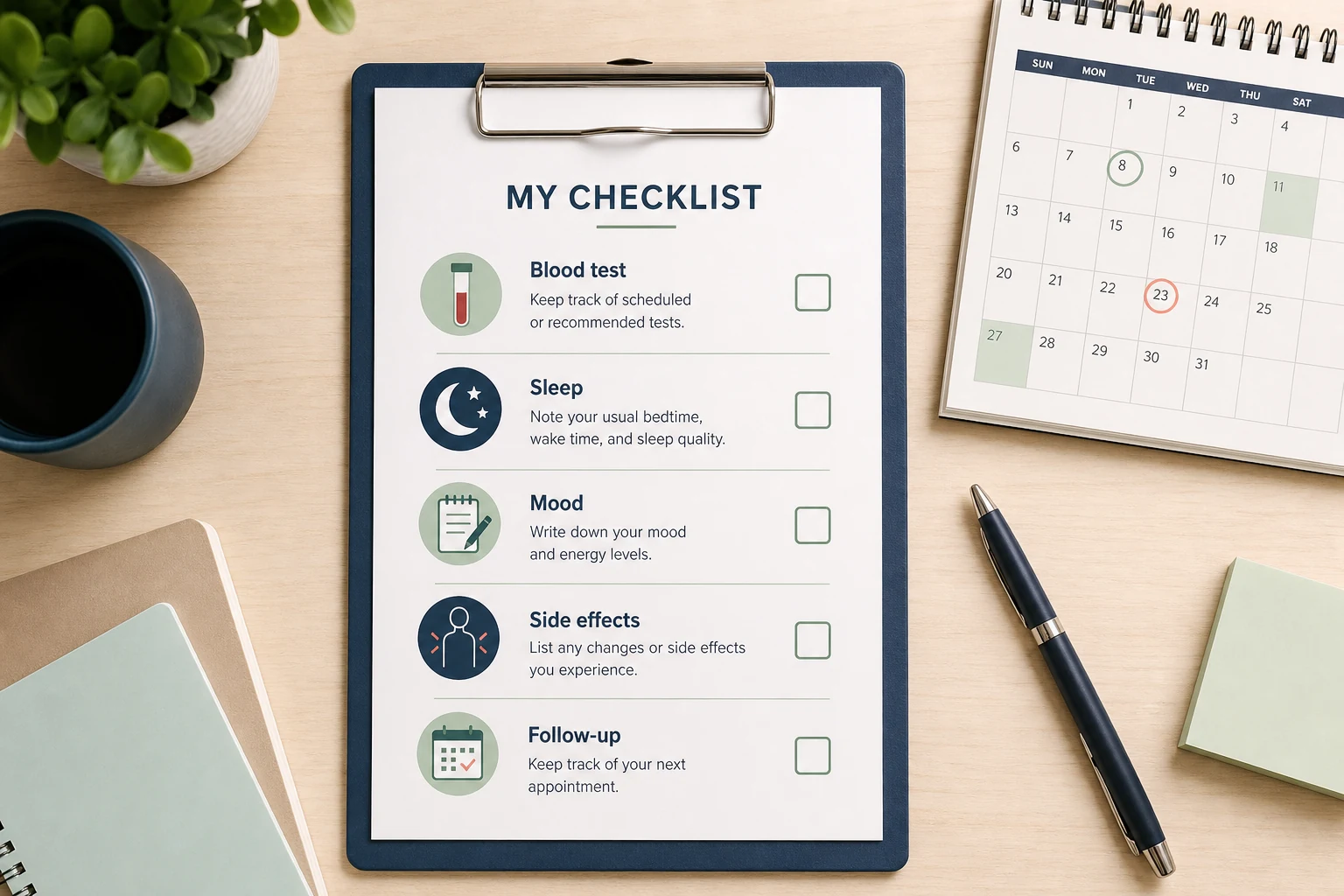
Weight gain, sedation, tremor, nausea, dizziness, rash, sexual side effects, metabolic changes, kidney or thyroid changes, liver effects, and blood count changes are all examples of topics that may come up, depending on the medication. Bringing written questions can make a short appointment more useful. If you are using a BSDS-based self-reflection tool to organize mood patterns, consider writing down the episodes, sleep changes, triggers, and functional impacts you want the clinician to understand.
Is a Mood Stabilizer Only for Bipolar Disorder?
Mood stabilizers are strongly associated with bipolar disorder, but some medicines in this category also have other medical uses. Several anticonvulsants were developed for seizure disorders. Valproate has also been used for migraine prevention in nonpregnant people, though pregnancy-related warnings are important. Lithium, anticonvulsants, and atypical antipsychotics may sometimes be discussed in other psychiatric contexts.
That does not mean the same reasoning applies in every situation. Taking mood stabilizers when not bipolar may be appropriate in some medical contexts and inappropriate in others. The label on the medicine does not tell the whole story; the reason for prescribing, dose, monitoring plan, and alternatives matter.
"Natural mood stabilizers" is another common search phrase. Sleep regularity, reduced alcohol or substance use, exercise, nutrition, psychotherapy skills, social rhythm routines, and stress planning can support mood stability. They are not substitutes for medical care when bipolar symptoms are severe, recurrent, or impairing. They are best understood as supports that may sit alongside professional treatment.
How Screening Results Can Prepare the Medication Conversation
Screening tools cannot choose medication. They can, however, help people describe patterns that are easy to forget during an appointment. The Bipolar Spectrum Diagnostic Scale asks about a narrative pattern of mood, energy, behavior, and temperament. A higher score can be a reason to seek professional evaluation, while a lower score does not erase real distress or functional problems.
When medication is being considered, the most useful information is often concrete: sleep duration during elevated periods, risky decisions, racing thoughts, irritability, depressive crashes, family history, substance use, antidepressant reactions, hospital visits, and how long episodes last. A clinician can then compare that story with clinical criteria, safety needs, and treatment options.
For BSDS.me's audience, the responsible bridge is simple: use screening as a way to organize your story, then bring that story to a qualified professional. The goal is not to label yourself. The goal is to make the next conversation clearer.
Before You Ask for the Best Mood Stabilizer for Bipolar
The best mood stabilizer for bipolar disorder is the one that fits the person's episode pattern, health profile, safety needs, and follow-up plan well enough to be used consistently. That answer can change over time. Side effects may require adjustment. Life changes may alter risk. New symptoms may shift the treatment target.
Before an appointment, write a short medication conversation note:
- The top two symptoms you most want help with.
- Your most disruptive episode pattern.
- Any past medicine that helped or caused problems.
- Current prescriptions, supplements, alcohol, cannabis, and other substance use.
- Pregnancy plans or reproductive health questions, if relevant.
- Lab access, cost concerns, and follow-up barriers.
If you are not yet sure how to describe your mood history, a private mood-pattern check-in can give you language for that discussion. Treat the result as a starting point for reflection, not as a substitute for professional judgment. If symptoms feel unsafe, intense, or hard to control, contacting a healthcare professional or local emergency support promptly is more important than reading another article.

FAQ
What does BSDS mean?
BSDS means Bipolar Spectrum Diagnostic Scale. It is a self-report screening scale designed to help identify patterns that may be consistent with bipolar spectrum conditions. A BSDS result is not a treatment plan and cannot select a bipolar mood stabilizer.
What is the range of BSDS scores?
The commonly cited BSDS total score range is 0 to 25. Higher scores suggest a greater probability that bipolar spectrum patterns may be present, but interpretation depends on clinical context and should be discussed with a qualified professional.
What is the total Brief Bipolar Disorder Symptom Scale?
People sometimes use that wording when they are looking for the Bipolar Spectrum Diagnostic Scale. In BSDS scoring, the total is usually described as a 0 to 25 score based on checked statements plus a final "how well this fits" response.
How do you score the BSDS?
In the common scoring approach, the 19 narrative statements can contribute up to 19 points, and the final fit question can add up to 6 more points. That creates a total range of 0 to 25. Online tools may calculate this automatically, but the result still needs careful interpretation.
Are mood stabilizers for bipolar I and bipolar II different?
They can be. Bipolar I treatment often gives strong attention to mania and maintenance prevention. Bipolar II treatment may focus more on depressive recurrence and hypomania patterns. The medication conversation should be based on the person's actual history rather than the label alone.
What is the safest mood stabilizer for bipolar disorder?
There is no single safest option for everyone. Safety depends on medical history, pregnancy considerations, other medicines, side effect vulnerability, monitoring access, and the risks of untreated mood episodes. A clinician can compare those factors with the possible benefits.
Can lifestyle changes work as natural mood stabilizers for bipolar?
Regular sleep, therapy skills, exercise, reduced substance use, and predictable routines can support mood stability. They should not be treated as replacements for professional care when symptoms are severe, recurrent, or impairing.
Should I stop a mood stabilizer if side effects worry me?
Do not stop or change prescribed medication without medical guidance. Some medicines need careful tapering or monitoring, and stopping suddenly may increase health risks or mood instability. Contact the prescribing clinician promptly and describe the side effect clearly.