Is Bipolar Disorder Genetic? What Family History Really Means
If you are asking, “is bipolar disorder genetic,” you are usually asking something more personal too: does my family history explain my mood patterns, and does it mean the same thing will happen to me or someone I love? The short answer is that genetics can matter a lot, but they do not act alone. Bipolar disorder tends to run in families, and research points to many inherited risk factors. Still, genes are only part of a wider picture that can include sleep, stress, trauma, substances, life rhythm, and access to care. If you are sorting through mood changes, a gentle BSDS self-screening resource can help you organize observations before a conversation with a qualified mental health professional.

The Short Answer: Bipolar Disorder Has a Genetic Component
Bipolar disorder is not “only genetic,” but it is one of the mental health conditions where family and twin studies have consistently suggested a meaningful inherited component. People who have a close biological relative with bipolar disorder have a higher chance of developing bipolar-spectrum symptoms than someone without that family history.
That does not mean a parent passes bipolar disorder to a child in a simple yes-or-no way. It is not like inheriting a single-gene trait. Researchers usually describe bipolar risk as polygenic, which means many genetic differences may each add a small amount of risk. Some of those differences may affect mood regulation, sleep-wake rhythm, brain signaling, stress sensitivity, or how a person responds to life events.
The most useful way to think about it is probability, not destiny. A family history can raise the odds. It does not decide the outcome by itself.
Hereditary, Genetic, or Environmental: What Is the Difference?
People often use “hereditary” and “genetic” as if they mean the same thing. They overlap, but the distinction can make the topic less confusing.
“Genetic” refers to variations in DNA that may influence risk. “Hereditary” means those risk patterns can be passed through families. “Environmental” refers to non-DNA influences, such as disrupted sleep, chronic stress, substance use, major loss, trauma exposure, medical illness, and social support.
For bipolar disorder, the clearest answer is genetic and environmental together. A person may inherit a vulnerability, then have that vulnerability shaped by life rhythm, stress load, support, and treatment access. Another person may have a family history but never develop a bipolar disorder. A third person may develop bipolar disorder with no obvious known family history, possibly because family history is incomplete, symptoms were never recognized in relatives, or many small risk factors came together.
This is why broad family stories can be more useful than one isolated question. Instead of asking only whether someone had a label, it may help to notice patterns such as repeated periods of unusually high energy, reduced need for sleep, severe depression, impulsive decisions, hospital stays, or major mood shifts across generations.
How Much of Bipolar Disorder Is Genetic?
You may see different “bipolar hereditary percentage” numbers online because studies use different methods and populations. Many scientific discussions place the inherited contribution in a high range, often meaning genetics explains a large share of population-level risk variation. That does not mean an individual person has a fixed percent chance.
This difference matters. Heritability is about variation across a population, not a personal prediction tool. If a study says genetics contributes strongly to bipolar disorder risk, it does not mean that most people with a family history will develop bipolar disorder, and it does not mean environment is minor. Sleep disruption, stress physiology, early adversity, medication changes, substance use, and daily routines can still influence whether mood symptoms appear, return, or become harder to manage.
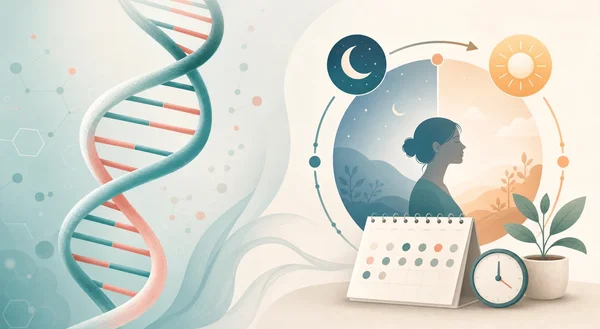
Is Bipolar Disorder Passed From the Mother, Father, or Grandparents?
Bipolar disorder risk can come through either side of a biological family. It is not limited to mothers, fathers, or one specific grandparent line. If a parent has bipolar disorder, a child may have a higher risk than the general population, but the child may also never develop it. If a grandparent had bipolar disorder, the connection may still be relevant, though the risk is usually less direct than with a parent or sibling.
Family history can also be difficult to read. Older relatives may have used different words for mood episodes, such as “nervous breakdown,” “periods of high spirits,” “reckless phases,” “bad depressions,” or “sleep problems.” Some people were never assessed, and some families avoided talking about mental health altogether.
If you are preparing for a professional appointment, write down what you know without trying to force certainty. Useful notes might include which relatives had major mood changes, approximate age when symptoms appeared, any hospital care, patterns of alcohol or drug use, and whether symptoms came in episodes rather than staying constant.
Is Bipolar 2 Disorder Genetic Too?
Bipolar 2 disorder also appears to have a genetic component. It is not simply “less genetic” because hypomania is usually less extreme than mania. Bipolar 2 often involves recurrent depression plus hypomanic episodes, and family history can be relevant when someone has depression that does not fully fit a unipolar pattern.
This is one reason careful history matters. Some people remember depressive episodes clearly but overlook hypomanic periods because those times may feel productive, social, or unusually energized. Others only notice the cost later, such as disrupted sleep, conflict, spending problems, racing thoughts, or a crash into depression.
An educational bipolar spectrum screening tool can support reflection on these patterns, especially when you want a structured way to think through changes in mood, energy, sleep, and behavior. It should be treated as preparation for discussion, not as a final clinical answer.
Are You Born With Bipolar Disorder, or Does It Develop?
This question is understandable, but the answer is not either-or. A person may be born with genetic vulnerabilities that increase risk, while bipolar symptoms often emerge later. Many people first notice significant symptoms in adolescence or young adulthood, although timing varies.
Development can depend on both biology and context. Puberty, sleep loss, major stress, trauma, postpartum changes, substance use, antidepressant exposure, and irregular routines may all be relevant for some people. None of these factors proves that bipolar disorder is present. They are clues a clinician may consider alongside mood episodes, duration, impairment, family history, and other medical or mental health possibilities.
It is also important not to treat trauma and genetics as competing explanations. The question “is bipolar genetic or trauma” can create a false choice. Trauma can affect mood, sleep, threat sensitivity, relationships, and coping. Genetics can affect vulnerability. For some people, both may be part of the story. For others, another explanation may fit better.
What Are Common Signs to Watch For?
Genetic risk becomes more meaningful when it is paired with real-life mood patterns. Five broad signs that may be worth tracking include unusual mood elevation or irritability, much more energy than usual, reduced need for sleep, impulsive or risky behavior, and episodes of depression that affect daily functioning.
The key word is episodes. Bipolar-spectrum patterns are usually not just ordinary moodiness or a personality style. Clinicians look at how long changes last, whether they are clearly different from the person’s baseline, how they affect work or relationships, and whether they include changes in sleep, speech, activity, confidence, spending, sexuality, or risk-taking.
Oversharing can happen during energized or disinhibited states for some people, but by itself it is not enough to identify bipolar disorder. Some people overshare because of anxiety, ADHD, trauma responses, personality traits, substance use, social context, or simple habit. It becomes more relevant when it appears as part of a broader episode with sleep and energy changes.
Is There a Genetic Test for Bipolar Disorder?
At the moment, genetic testing is not a stand-alone way to determine whether a person has bipolar disorder or will develop it. Large research studies have identified many genetic regions associated with bipolar disorder, and that work is scientifically important. But those findings do not translate into a simple personal yes-or-no test.
Polygenic risk scores may become more useful in research and, eventually, some areas of care. Today, they cannot replace a careful clinical assessment that includes mood history, family history, medical factors, medication history, substance use, sleep patterns, and functional impact.
Be cautious with any product or claim that suggests one DNA report can settle the question. Genetics may help explain risk. It cannot tell the whole story of a person’s lived experience.
What To Do If Bipolar Disorder Runs in Your Family
If bipolar disorder runs in your family, the most helpful next step is not panic. It is pattern tracking. Write down changes in sleep, energy, mood, spending, speech, focus, irritability, risk-taking, and depression. Note when changes began, how long they lasted, and whether other people noticed.
You can also protect the basics that often matter for mood stability: consistent sleep, reduced substance risk, regular routines, supportive relationships, and early help when symptoms intensify. If you have periods of very little sleep with high energy, thoughts of self-harm, severe depression, risky behavior, or symptoms that disrupt work or relationships, reach out to a qualified mental health professional or emergency support in your area.
For a low-pressure way to organize what you have noticed, you can review a gentle BSDS learning path and use the result as one piece of context. Bring your notes, family history, and questions to a professional who can look at the full picture with you.

FAQ
Is bipolar disorder a genetic disorder?
It has a strong genetic component, but it is not caused by one simple gene. Many small genetic influences can combine with environmental and life factors, so family history raises risk without deciding a person’s future.
Is bipolar disorder always genetic?
No. Some people have a clear family history, while others do not know of any relatives with bipolar disorder. Missing family history does not rule it out, and family history alone is not enough to explain every mood concern.
Can bipolar disorder come from grandparents?
A grandparent’s history can be relevant because inherited risk can travel through generations. The connection is usually considered alongside parents, siblings, other relatives, and the person’s own mood episodes.
What is the main cause of bipolar disorder?
There is no single main cause that explains every case. Current understanding points to a mix of genetic vulnerability, brain and body rhythms, stress, sleep, environment, and individual life history.
Can bipolar disorder go away completely?
Bipolar disorder is generally discussed as a long-term condition that can often be managed with appropriate care, support, and routine. Many people improve significantly with a thoughtful treatment plan and ongoing follow-up.
Is bipolar disorder genetic or learned?
It is not simply learned, and it is not only genetic. A person may inherit vulnerability, while experiences and environment can shape when symptoms appear and how strongly they affect daily life.
Should I worry if bipolar disorder runs in my family?
Concern can be useful if it leads to careful tracking and early support. It does not need to become fear. Family history is a reason to stay informed, protect sleep and routines, and seek professional guidance if mood episodes become disruptive.