Manic Depression: What Is It Called Now and What Does It Mean?
If you searched "manic depression what is," you are probably trying to connect an older phrase with what clinicians and educational resources usually call bipolar disorder today. Manic depression is not a casual mood swing or a personality label. It is an older name for patterns of mood episodes that may include periods of mania or hypomania and periods of depression. For people who are just beginning to notice recurring shifts in mood, energy, sleep, and behavior, an online BSDS screening and education tool can offer a low-pressure way to organize observations before speaking with a qualified professional.
This guide explains what manic depression means now, what manic and depressive episodes can look like, how it differs from ordinary ups and downs, and what steps may help when the pattern feels confusing or disruptive.

Why Manic Depression Is Now Usually Called Bipolar Disorder
"Manic depression" was widely used for many years because it described the two visible poles of the condition: elevated or activated states on one side and depressive states on the other. Today, "bipolar disorder" is the more common medical and educational term. The newer term is broader and more precise because not every person experiences the same type of elevated mood.
Some people have mania, which can involve a very elevated, energized, or irritable state that strongly affects judgment, sleep, activity, and functioning. Others have hypomania, which is less intense than mania but still different from a person's usual baseline. Depression can involve low mood, loss of interest, fatigue, sleep changes, appetite changes, slowed thinking, guilt, hopelessness, or trouble concentrating.
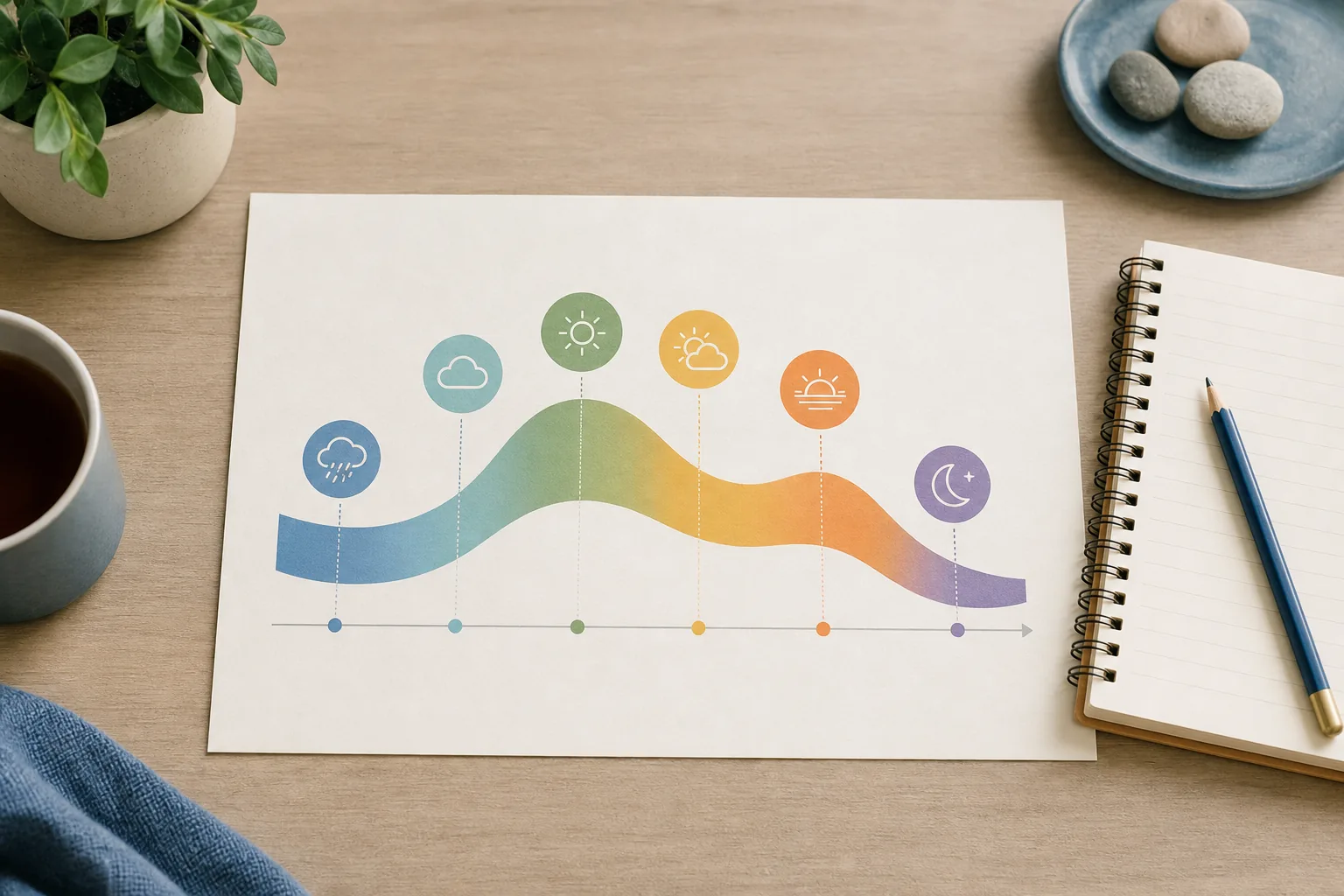
The key idea is not simply "happy then sad." Bipolar disorder is about episodes: noticeable periods when mood, energy, sleep, activity, and behavior shift together and affect daily life. These periods may last days, weeks, or longer, and they may be separated by steadier stretches.
What Is Manic Depression Like in Real Life?
A manic depressive pattern can be hard to recognize because it may not look dramatic from the outside. A person may seem unusually productive, sociable, confident, restless, or irritable during an elevated period. They may sleep much less yet feel energized. Speech may become faster, plans may multiply, spending may increase, or choices may become more impulsive than usual.
During a depressive period, the same person may withdraw, move more slowly, feel emotionally flat, struggle to make decisions, sleep too much or too little, lose interest in usual activities, or feel overwhelmed by ordinary tasks. The contrast between these states can confuse the person experiencing them and the people close to them.
The phrase "manic depressive person" can sound like it defines someone's character. A more respectful way to think about it is that a person may experience mood episodes. The person is still more than the symptoms. Episodes can affect behavior, but they do not erase personality, values, relationships, or the possibility of support.
Mania, Hypomania, and Depression: The Three Terms to Know
Understanding manic depression starts with three building blocks.
Mania is an elevated or highly irritable mood state with increased energy or activity. It may come with a decreased need for sleep, racing thoughts, unusually fast speech, grand plans, distractibility, risk-taking, agitation, or behavior that creates serious consequences. In some cases, a person may lose touch with reality or need urgent care.
Hypomania has some similar features, such as increased energy, reduced sleep, rapid thinking, or unusually confident behavior, but it is generally less severe than mania. It may still disrupt relationships, work, school, money decisions, or safety, especially when it is followed by depression.
A bipolar depressive episode is more than having a bad day. It may include persistent sadness, emptiness, loss of pleasure, fatigue, changes in sleep or appetite, difficulty thinking clearly, feelings of worthlessness, or thoughts of death. If thoughts of self-harm or immediate danger appear, treat that as urgent and contact emergency services or a crisis line such as 988 in the United States.
What Is the Difference Between Depression and Manic Depression?
Depression usually refers to a depressive disorder or a depressive episode marked by low mood, loss of interest, low energy, and related symptoms. Manic depression, now commonly discussed as bipolar disorder, includes depressive periods plus a history of mania or hypomania.
That distinction matters because support plans can differ. A person who only talks about low mood may not mention past periods of unusually high energy, little sleep, racing thoughts, impulsive decisions, or intense irritability. Yet those elevated periods can be important context for a clinician.
This is also why a screening tool is only a starting point. It can help someone gather patterns, but it cannot replace a professional conversation that reviews symptom history, duration, medical factors, substance use, medications, family history, and current risk.
How Long Does Bipolar Depression Last?
There is no single timeline for bipolar depression. Some depressive episodes last a few weeks. Others last longer. Some people have long stable periods between episodes, while others notice more frequent shifts. Duration can depend on the type of bipolar pattern, stress, sleep disruption, treatment history, substance use, medical conditions, and support.
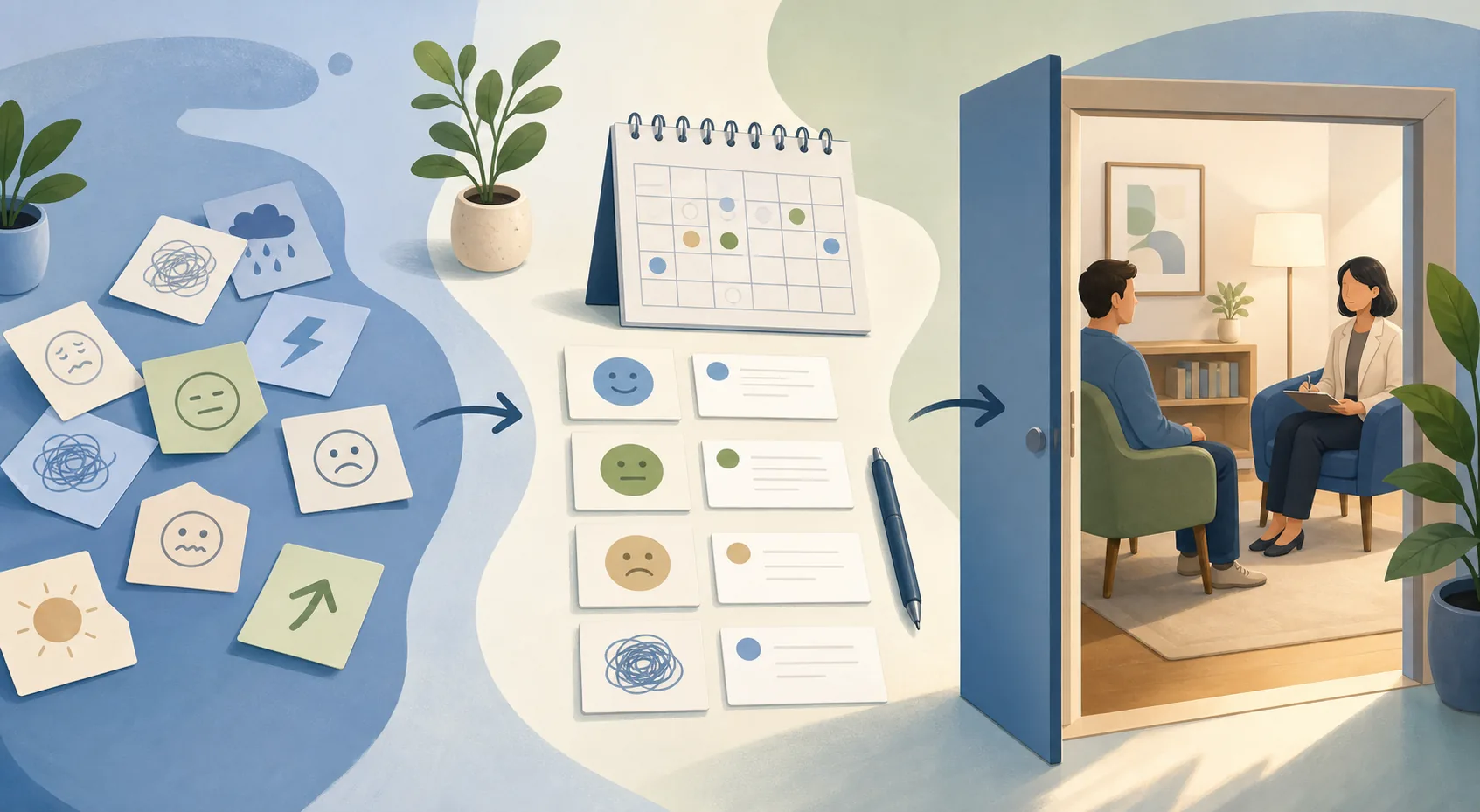
Because timing varies, the practical question is often: what is changing from the person's baseline? A useful observation record might include sleep, energy, mood, irritability, activity level, spending, social behavior, concentration, appetite, and major stressors. The goal is not to prove anything alone. The goal is to make the pattern easier to discuss.
If you are unsure whether a low period is ordinary sadness, depression, burnout, grief, or part of a bipolar pattern, note the timeline and context. Did it follow a period of unusually high energy or reduced sleep? Is it affecting work, school, relationships, hygiene, or safety? Has it happened before? These details help a qualified professional understand the full picture.
What Causes Manic Depression?
No single cause explains manic depression. Research points to a mix of factors. Family history can increase risk, but it does not make any outcome certain. Brain and body rhythms, especially sleep and circadian patterns, may play a role. Stress, trauma, substance use, major life changes, and some medical factors can also influence mood episodes.
It is usually more helpful to think in terms of vulnerability plus triggers. A person may have an underlying sensitivity to mood episodes, and certain conditions may make an episode more likely. Sleep loss is a common example. For some people, several nights of reduced sleep can be part of an elevated mood pattern rather than simply a busy week.
This is another reason gentle tracking can be useful. Patterns often become clearer when mood is viewed alongside sleep, energy, routines, and stress instead of mood alone.
What to Do During a Manic or Depressive Episode
When an episode may be happening, the most useful first step is often reducing risk and increasing support. During elevated states, that may mean protecting sleep, delaying major purchases or decisions, avoiding alcohol or recreational drugs, asking a trusted person to help monitor risk, and contacting a mental health professional if behavior feels out of character or unsafe.
During depressive states, support may include keeping basic routines as small as possible, reducing isolation, reaching out to a trusted person, and getting professional help when symptoms interfere with daily life. If someone has thoughts of self-harm, feels unable to stay safe, or seems disconnected from reality, urgent support is appropriate.
For people still in the "is this a pattern?" stage, a gentle BSDS self-reflection starting point may help organize mood and behavior changes into language that is easier to bring into a professional conversation. The result should be treated as educational information, not a final answer about someone's health.
How Loved Ones Can Respond Without Labeling
Friends, partners, and family members may notice shifts before the person does. The challenge is to describe observations without turning them into accusations. Instead of saying, "You are manic depressive," it is usually kinder and more useful to say, "I have noticed you have slept very little this week and seem more energized and irritable than usual. I care about you and wonder if support would help."
Use specific behaviors, timelines, and impact. Avoid arguing about labels during a heated moment. Offer practical help: making an appointment, writing down recent changes, reducing stimulation, arranging transportation, or staying nearby if safety is a concern.
If the person is at immediate risk, safety comes first. Call emergency services, a local crisis service, or 988 in the United States. If the risk is not immediate but the pattern is concerning, encourage a professional evaluation and keep the conversation steady, respectful, and focused on support.
Using BSDS as a Careful First Step
People often search "what is manic depression" because they want language for something that feels hard to explain. A screening resource can be useful when it helps turn scattered observations into a clearer set of questions. The BSDS is designed around bipolar spectrum patterns, so it can be especially relevant for people exploring mood shifts, energy changes, and possible hypomanic traits.
Still, the safest way to use any screening result is as a conversation starter. It can help you reflect on what you have noticed, prepare examples, and decide whether to seek a formal mental health assessment. It should not be used to label yourself or someone else.
If your main question is "manic depression what is, and could my pattern fit?" consider reviewing your symptoms, timeline, and daily-life impact with a BSDS mood-pattern learning resource, then bring those notes to a qualified professional. That balanced approach keeps self-reflection useful while leaving personal medical decisions where they belong.

FAQ
What is a manic depressive person like?
A person is not defined by the phrase manic depressive. Someone with a bipolar-type pattern may have episodes of unusually elevated or irritable mood, increased energy, reduced need for sleep, impulsive behavior, or racing thoughts, as well as episodes of depression. Between episodes, many people have steadier periods and function in ways that look like their usual selves.
What is a bipolar depressive episode?
A bipolar depressive episode is a period of depression that occurs in the context of a bipolar pattern. It may involve sadness, emptiness, loss of interest, fatigue, sleep or appetite changes, slowed thinking, guilt, hopelessness, or trouble concentrating. It can resemble other forms of depression, which is why history of mania or hypomania matters.
How long does bipolar depression last?
Length varies. Some episodes last weeks, while others may last longer. Frequency and duration can differ from person to person. If symptoms are persistent, disruptive, or linked with thoughts of self-harm, it is important to seek professional or urgent support.
How do you get out of a manic depressive episode?
There is no simple switch that ends an episode. Helpful steps can include reducing immediate risk, protecting sleep, avoiding substances, contacting trusted support, and speaking with a qualified mental health professional. If safety is in question, use emergency or crisis support right away.
What is manic depression called now?
Manic depression is now usually called bipolar disorder. The older phrase described shifts between manic and depressive states, while the newer term better includes patterns involving mania, hypomania, depression, mixed features, and different bipolar subtypes.
Is manic depression the same as mood swings?
No. Ordinary mood swings are common and often tied to daily events. Bipolar mood episodes tend to involve stronger changes in mood, energy, sleep, activity, and behavior, and they can affect functioning for days, weeks, or longer.
Can an online screening tool tell me if I have bipolar disorder?
An online screening tool can help organize self-observations, but it cannot provide a final personal medical answer. Use screening results as educational information and as preparation for a conversation with a qualified professional.